
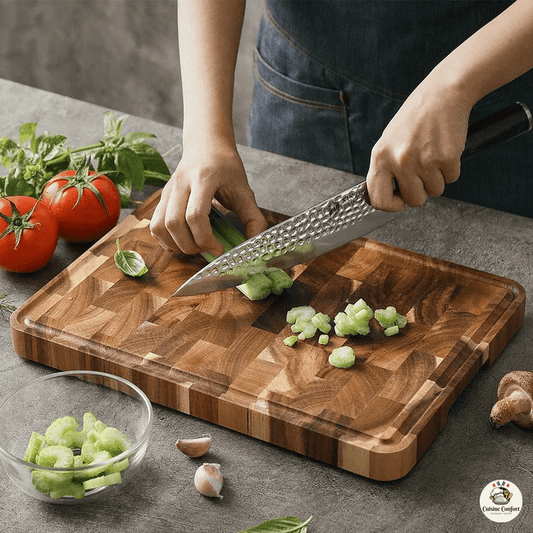


 Acacia Cutting Board with Juice Groove
01
Size and fit
Compare size, thickness, and listed weight. Make sure the board fits your counter, sink, and storage space.
Find your everyday board
Explore stainless steel, wood, and checkerboard designs in a range of sizes and finishes.
Choosing well
Start with your routine, the right size, and the care it needs.
Acacia Cutting Board with Juice Groove
Compare size, thickness, and listed weight. Make sure the board fits your counter, sink, and storage space.
 Acacia Checkerboard Cutting Board
For prep or serving, check both faces, any grooves, and the grip details shown for this specific board.
 Solid Acacia Cutting Board
Hand wash, avoid soaking, and dry after cleaning. Use a food-contact cutting board oil when recommended for your model.
Need help choosing?
Contact us
The acacia cutting boards are ideal if you’re looking for a wood cutting board that is sturdy, warm, and pleasant for everyday use.
Acacia is a dense, durable wood. Its surface absorbs the blade’s contact better than a very hard surface, while still offering excellent stability for cutting vegetables, fruit, bread, cheese, or cooked meats.
Each cutting board has a unique grain, with golden and brown tones that bring a true natural touch to the kitchen. To discover other wood types, also check out our collection of wooden cutting boards.
Acacia stands up well to repeated cutting and provides a stable surface for regular cooking.
The wood absorbs contact from the blade and helps keep the edge sharper longer.
Its natural grain and warm tones give the countertop a premium look.
Cutting, serving, presentation, appetizers: an acacia cutting board is just as useful in the kitchen as at the table.
Acacia is appreciated for its density, natural strength, and appearance. It's a wood that handles everyday use well while still feeling good under the blade.
Unlike a plastic cutting board that can show marks quickly, a well-maintained acacia cutting board keeps a beautiful surface over time. It is not limited to cutting: it can also be used as a serving board for bread, cheese, or cured meats.
| Material | Ideal for | Main benefit | Good to know |
| Acacia | Daily use, serving, elegant cooking | Dense, durable, and highly attractive | Requires regular oiling |
| Bamboo | Light use, natural kitchen | Light and practical | Harder surface for knives |
| Classic wood | Everyday cutting | Gentle on blades | Variable quality depending on the wood species |
| Checkerboard | Heavy use, premium kitchen | Very stable and durable | Often thicker and heavier |
The right size depends on your workspace and your kitchen habits. A small cutting board works well for quick cuts, while a larger format offers more comfort when prepping several foods at once.
| Format | Ideal for |
| Small size | Fruit, bread, cheese, quick small cuts |
| Medium size | Everyday use, vegetables, family meals |
| Large size | Large prep, frequent cooking, serving at the table |
If you like more detailed designs, our checkerboard cutting boards combine several wood blocks for a handcrafted, very premium look.
The acacia board is not limited to the countertop. Thanks to its natural tones, it can be used right at the table to present cheese, cured meats, bread, fruit, or appetizers.
That dual purpose is what makes it especially appealing: you get a functional cutting board, but also a beautiful serving accessory. To complete your table service, you can also discover our round cutting boards.
Clean with warm water, mild soap, and a non-abrasive sponge.
Dry the cutting board quickly after washing to keep the wood from warping.
Apply a food-safe oil every 4 to 6 weeks depending on use.
Heat and prolonged moisture can crack or warp the wood.
To extend the life of your cutting board, see our full guide: maintaining a cutting board with oil.
Yes. Acacia is dense, sturdy, and attractive, making it an excellent choice for a durable cutting board.
No. Like most wood cutting boards, it should be hand-washed to avoid cracks and warping.
Yes. Regular oiling nourishes the wood, limits drying out, and extends the cutting board's life.
Yes. Its natural grain and warm colors make it a beautiful serving board for cheese, bread, or appetizers.
Acacia is a dense wood with a more premium look. Bamboo is lighter, but often harder on knives.
An acacia cutting board combines durability, natural beauty, and everyday comfort of use.
Choose a model suited to your kitchen and enjoy a durable, elegant, and pleasant-to-use cutting board.Find all our models in our complete collection of cutting boards.