


 Stainless Steel Kitchen Cutting Board
01
Size and fit
Compare dimensions, thickness, and any support features. A product photo alone is not a reliable size guide.
Find your everyday board
Explore stainless steel, wood, and checkerboard designs in a range of sizes and finishes.
Choosing well
Start with your routine, the right size, and the care it needs.
Stainless Steel Kitchen Cutting Board
Compare dimensions, thickness, and any support features. A product photo alone is not a reliable size guide.
 Stainless Steel Cutting Board with Counter Lip
Cutting feel also depends on the material. Compare the board’s faces, grips, and support details with your everyday routine. Follow your knife maker’s guidance when choosing a cutting surface.
 PureLame Titanium Cutting Board
Clean after use and dry thoroughly. Only use a dishwasher if the instructions for your specific board allow it.
Need help choosing?
Contact us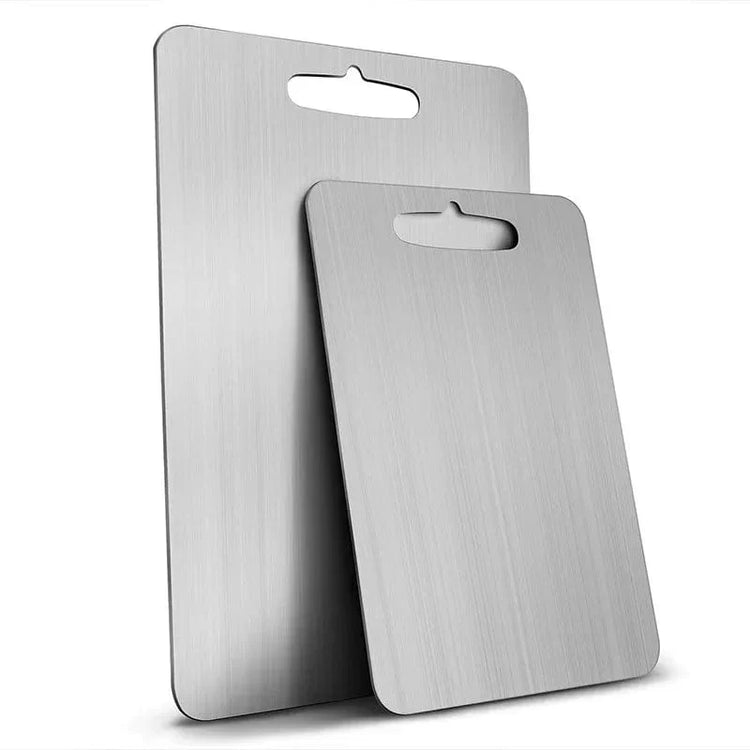
Discover our selection of stainless steel cutting boards, designed for a cleaner, more durable kitchen that's easier to care for every day.
Unlike wood or plastic cutting boards, stainless steel is a nonporous surface: it does not retain odors, juices, or food residue. It's an ideal choice for preparing meat, fish, vegetables, fruit, or ready-to-eat foods.
Stainless steel does not absorb liquids and limits the buildup of food residue.
After garlic, fish, or meat, a simple cleaning brings the surface back to clean.
A stainless steel cutting board won’t crack, swell, or warp like some traditional boards.
Most models rinse easily and can go in the dishwasher, depending on the product.
The choice depends mainly on how you use it. Stainless steel is ideal if you want an easy-to-clean surface, wood is more comfortable on knives, while plastic works well for quick everyday use.
| Board type | Benefits | Good to know |
| Stainless steel | Hygienic, durable, doesn’t hold odors, quick to clean | Firmer and slightly louder when cutting |
| Wood | Natural look, pleasant to use, warm style | Requires more care and can retain moisture |
| Plastic | Lightweight, practical, often economical | Can scratch and wear out faster |
Benefits: hygienic, durable, does not retain odors, and cleans quickly.
Good to know: firmer surface and a slightly louder cut sound.
Benefits: natural look, pleasant to use, and warm style.
Good to know: requires more care and can hold moisture if it doesn’t dry properly.
Benefits: lightweight, practical, and often economical.
Good to know: can scratch and wear out more quickly over time.
After each use, clean your cutting board with warm water, a soft sponge, and a suitable soap. Avoid overly abrasive sponges if you want to keep the surface looking good over time.
Because stainless steel is nonporous, it does not need oil or special treatment, unlike some wooden cutting boards. For a more complete cleaning, check the product sheet to see whether your model is dishwasher-safe.
No, stainless steel does not retain odors the way some worn wood or plastic cutting boards can.
Yes, stainless steel is suitable for meat, fish, and raw foods thanks to its nonporous, easy-to-clean surface.
Most models are dishwasher safe, but it is best to check the recommendations listed on each product page.
Stainless steel is firmer than wood or plastic. To protect your knives, avoid overly aggressive motions and use controlled cutting.
Whether you’re looking for a sturdy cutting board, one that’s easy to clean, or one that’s more hygienic for everyday prep, our stainless steel cutting board collection offers practical, durable models.
Choose the cutting board suited to your kitchen and enjoy a clean, modern, and reliable surface every day.You can also discover our wood cutting boards or our plastic cutting boards.