

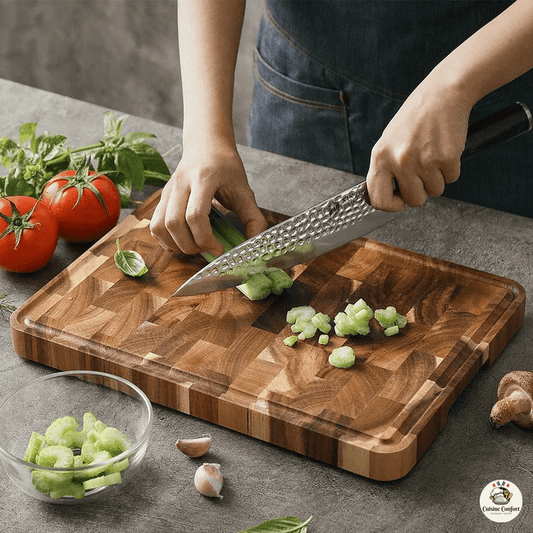




 Solid Oak Cutting Board
01
Size and fit
Compare size, thickness, and listed weight. Make sure the board fits your counter, sink, and storage space.
Find your everyday board
Explore stainless steel, wood, and checkerboard designs in a range of sizes and finishes.
Choosing well
Start with your routine, the right size, and the care it needs.
Solid Oak Cutting Board
Compare size, thickness, and listed weight. Make sure the board fits your counter, sink, and storage space.
 Acacia Cutting Board with Juice Groove
For prep or serving, check both faces, any grooves, and the grip details shown for this specific board.
 Acacia Checkerboard Cutting Board
Hand wash, avoid soaking, and dry after cleaning. Use a food-contact cutting board oil when recommended for your model.
Need help choosing?
Contact us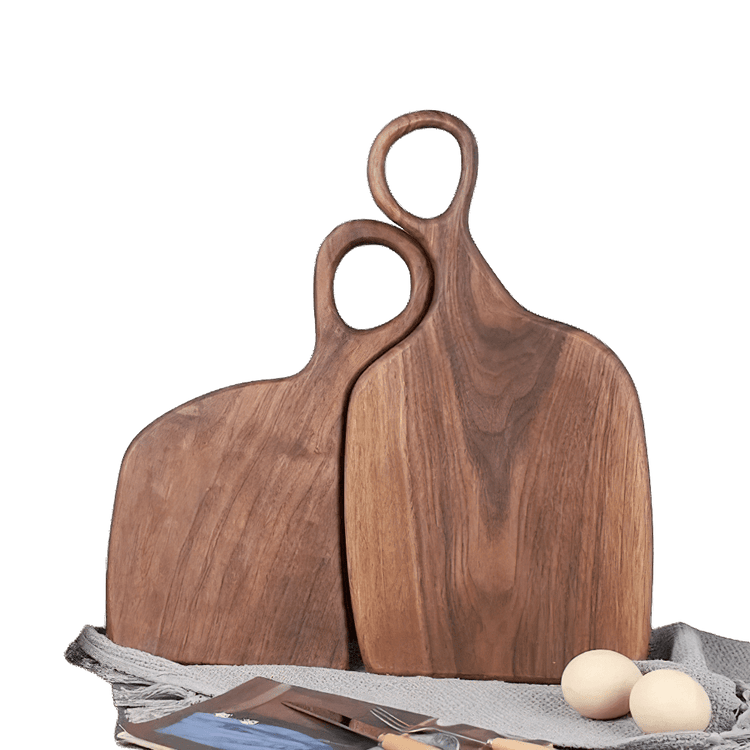
The wood cutting board remains a safe choice in the kitchen. Natural, stable, and pleasant to use, it offers a cutting surface that is gentler on knives than a glass, stainless steel, or very hard surface.
Wood absorbs the blade’s contact slightly instead of bouncing it back directly. The result: more comfortable cutting, less noise, and less daily wear on your knives.
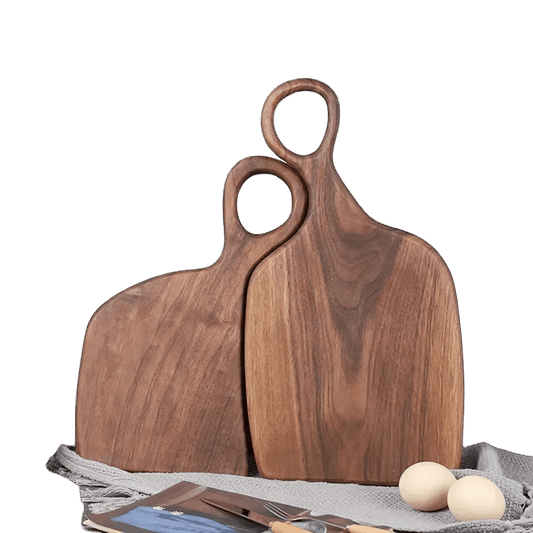
A wooden cutting board also brings a warm feel to the kitchen. The natural grain of acacia, beech, walnut, or oak gives each model a unique look, more authentic than a standard plastic cutting board.
Wood cushions the blade's contact and helps keep your knives sharp longer.
Its surface is pleasant, stable, and quieter than very hard materials.
Each wood species has its own shades, grain, and finishes for a more elegant kitchen.
A well-maintained cutting board can be part of your kitchen for many years.
Not all wood cutting boards are the same. Some wood species prioritize durability, others appearance, lightness, or cutting comfort. The right choice depends mostly on your daily use.
| Essence | Ideal for | Main benefit | Good to know |
| Acacia | Daily use, regular cutting, serving | Dense, durable, and very attractive | Requires quick drying after washing |
| Beech | Everyday cooking, vegetables, bread, cheese | Good balance between cutting comfort and price | Oil regularly to prevent drying out |
| Walnut | Elegant kitchen, gift, presentation | Premium finish and deep color | Often more expensive than standard wood types |
| Oak | Versatile cutting and serving | Solid wood with an authentic look | Must stay completely dry after cleaning |
| Bamboo | Light use, natural and practical cutting board | Lightweight, attractive, and easy to handle | Often a harder surface for delicate knives |
Ideal for: everyday use, regular cutting, and serving.
Advantage: dense, durable wood with a beautiful look.
Good to know: requires quick drying after washing.
Ideal for: everyday cooking, vegetables, bread, and cheese.
Advantage: good balance between cutting comfort and price.
Good to know: oil regularly to keep it from drying out.
Ideal for: elegant kitchen, gift, and presentation.
Advantage: premium finish and deep color.
Good to know: often more expensive than standard wood species.
Ideal for: versatile cutting and serving.
Advantage: solid wood with an authentic look.
Good to know: must stay completely dry after cleaning.
Ideal for: light use and practical natural cutting board.
Advantage: lightweight, attractive, and easy to handle.
Good to know: often harder on delicate knives.
A solid wood cutting board is generally more stable and more durable than a thin board. It is better suited to regular use, especially if you cook often or want a solid surface on your countertop.
Acacia is appreciated for its high-end look and good durability. Beech remains a safe choice for everyday use. Bamboo, which is lighter, works well for small cuts, but it can feel firmer under the blade.
For a more refined look, you can also discover our acacia cutting boards or our checkerboard cutting boards.
A wood cutting board needs simple but regular care. The goal is to avoid prolonged moisture, cracks, and the material drying out.
Wash your cutting board with warm water, mild soap, and a non-abrasive sponge.
Dry it properly after washing and avoid leaving it flat on a damp surface.
Food-grade oil helps nourish the fibers and limit cracks over time.
Heat and prolonged moisture can cause the wood to swell, crack, or warp.
To go further, find our complete guide: how to care for a cutting board with oil.
A wooden cutting board is not just for cutting. Thanks to its natural look, it can also be used right at the table to serve bread, cheese, deli meats, fruit, or appetizers.
This dual use is what makes it especially appealing: it stays practical for cooking while adding a more elegant touch when serving.
For everyday use, acacia and beech are often very good choices. Walnut is ideal if you're looking for a more premium, decorative cutting board.
Yes. Wood is gentler on blade edges than very hard surfaces like glass or some rigid boards.
No. The dishwasher is not recommended, because heat and moisture can crack, swell, or warp the wood.
In general, oiling every 4 to 6 weeks is enough. For heavy use, you can do it more often.
A food-safe mineral oil is often used. The key is to choose an oil that is safe for food contact and does not go rancid quickly.
Whether you’re looking for a sturdy cutting board for everyday cooking or a beautiful natural surface for serving at the table, a wood cutting board remains a kitchen essential.
Choose a wood species suited to your use and enjoy a cutting board that is durable, natural, and pleasant to use.You can also discover our complete collection of cutting boards or our stainless steel cutting boards.